

Nemadji Pottery: The Story Behind the Swirls
Colorful pottery, a Minnesota factory, and a history that isn't quite what you'd expect.
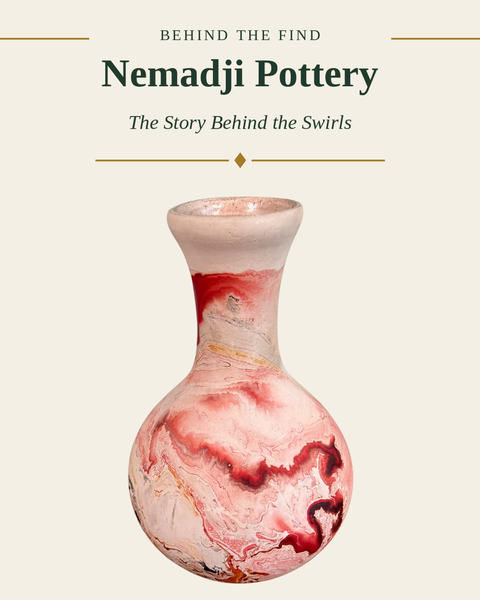
We recently brought home a Nemadji vase covered in beautiful, swirling shades of red, burgundy, and cream. The pattern almost looks like something you'd find in a piece of polished stone, with delicate lines winding around the surface.
It's the kind of thing that makes us curious.
Who made it? How did they get those colors to look like that? And why does a piece of pottery made in Minnesota look so much like something you might find in a Southwestern souvenir shop?
As it turns out, there's a pretty interesting story behind those swirls.

Made in Minnesota
Nemadji pottery started in Moose Lake, Minnesota, in 1923. The company originally made tile, which is a considerably less glamorous beginning than the colorful vases collectors recognize today.
Over time, the business expanded into decorative pottery. By the 1930s, its vases, bowls, and other pieces were finding their way into souvenir shops.
And it's easy to understand the appeal. They were colorful, affordable, and looked like something you might bring home from a trip out West.
Except they weren't made out West at all.
Where The Story Gets Complicated
If you've encountered Nemadji pottery before, you may have seen pieces labeled or described as Native American pottery.
That wasn't an accident.
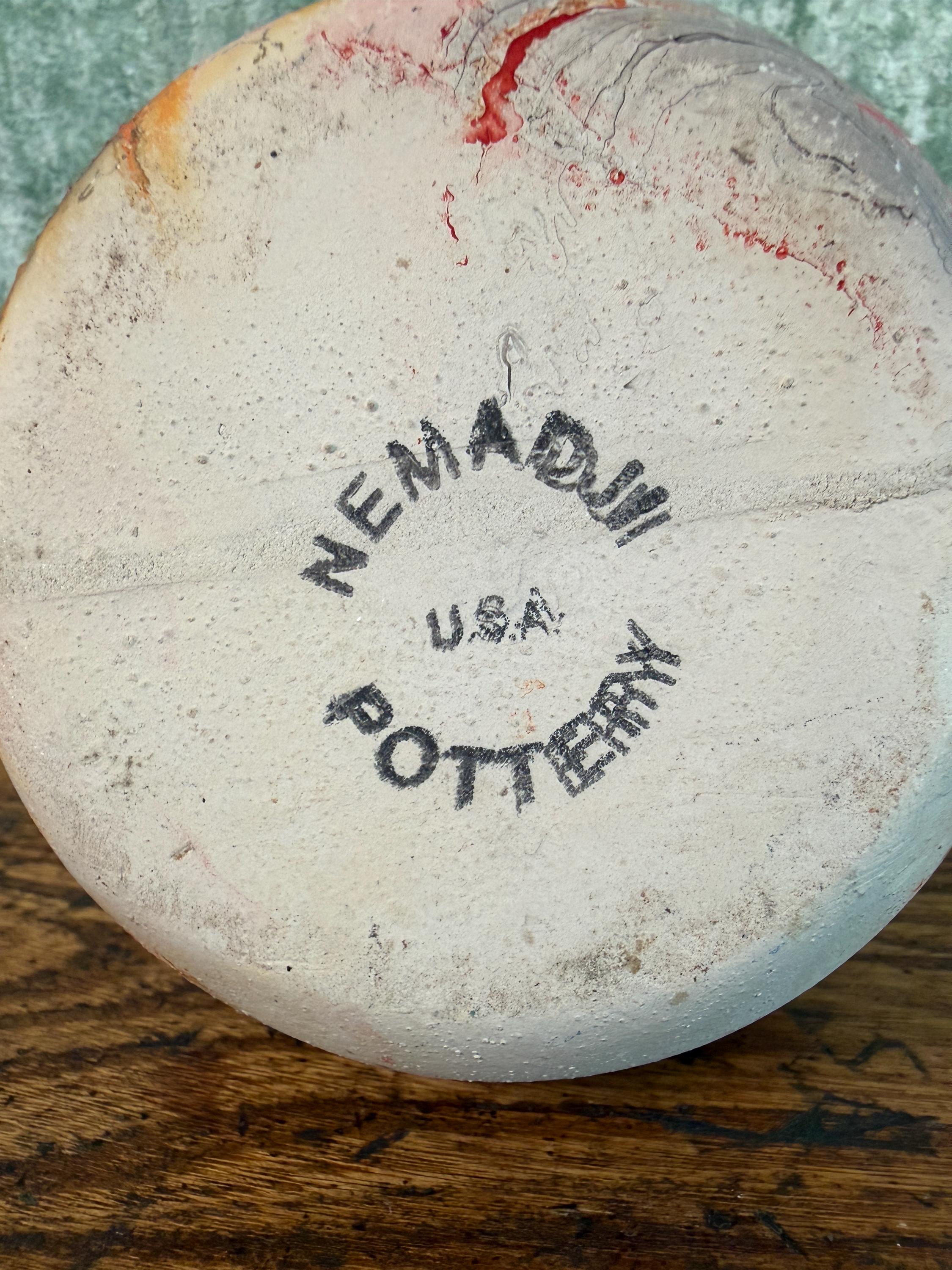
For years, the company used Native American imagery and associations to market its products. Some factory marks even included the words "Indian Pottery."
But Nemadji was commercial pottery made in Minnesota, not pottery produced by Native American artisans.
The marketing played into the popularity of Southwestern and Native American-inspired souvenirs, creating an impression that didn't accurately reflect the pottery's origins.
It's worth knowing that history, particularly when so many genuinely Indigenous pottery traditions have their own rich histories and distinctive techniques.
We can appreciate Nemadji's unusual designs and the ingenuity behind them without repeating the story its marketers wanted customers to believe.
So, How Did They Make Those Swirls?
This might be our favorite part of the story.
In 1929, a Danish immigrant named Eric Hellman developed the decorating technique that would become Nemadji's signature.
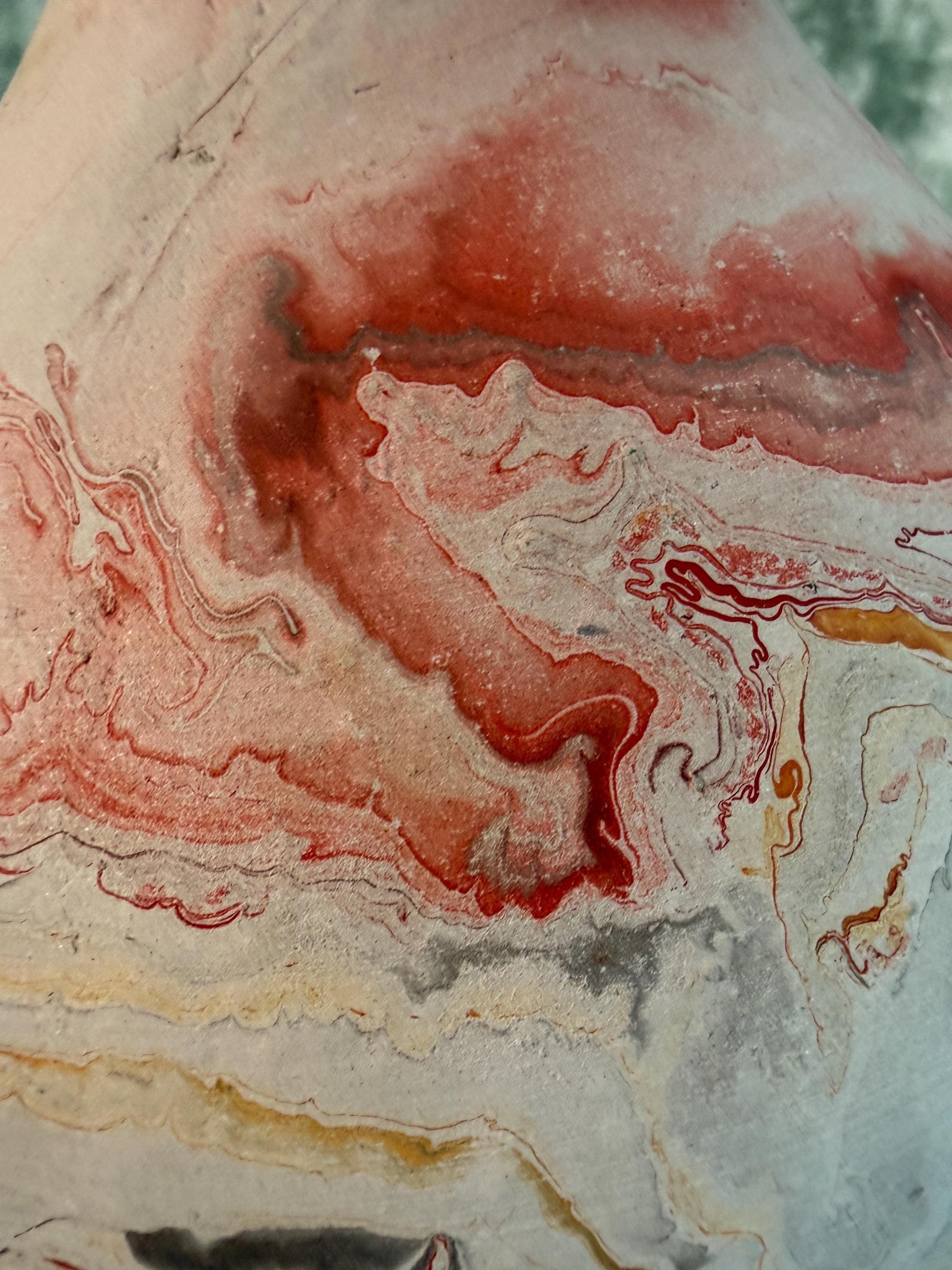
Rather than painting individual designs onto each vase, workers floated colors on the surface of water and dipped the pottery through them. As the piece moved through the water, the colors transferred onto its surface.
It's a little like the marbled paper you sometimes see inside old book covers.
The process meant that even two pieces made from the same mold could end up looking completely different.
Some have broad, dramatic ribbons of color. Others, like our vase, have delicate branching lines that almost resemble the contours on a map.
The patterns were applied after the pottery had been fired, which also explains why the surface can wear differently from traditional glazed ceramics.
Want to Know More?
If Nemadji pottery has caught your interest, there are some excellent resources worth exploring.
Michelle D. Lee's Nemadji Pottery Research
Michelle has spent years researching the company's history, including interviewing former employees and documenting its many factory marks. She's also the author of The Myth and Magic of Nemadji “Indian” Pottery, a resource for anyone interested in collecting or identifying these pieces.
Nemadji: Minnesota's “Southwest” Pottery — Twin Cities Bungalow Club
Donald-Brian Johnson's article offers another look at the company's history, with photographs and examples of different factory marks.
The red-and-cream Nemadji vase that inspired this story is now available in our shop. If its swirling patterns caught your eye as much as they caught ours, you can take a closer look here: